Playmate
Enabling playful language learning through new technology
Overview
PLAYMATE was designed for a UI/UX course, and completed over the course of 6 weeks.This was an independent project in which I was responsible for the concept, research, and visual design, though I regularly received feedback and input from my professor and peers, culminating in an interactive app prototype.
DURATION
6 weeks
ROLE
UX/UI Designer, User Researcher
TEAM
Solo
Opening the Toybox
For this assignment, we were broadly assigned to design an app that solves a problem for our assigned target audience. My assigned audience was children from low-income families who speak English as a second language. For research, I chose to focus on the geographical location of Oakland.
Before diving into any designs, I first conducted secondary research to dive into what life looks for people in this demographic. I found that children of color and low socioeconomic status in the Oakland area, many being children of immigrants, were far behind their peers in language abilities and few were enrolled in formal preschool. However, many of these families do not have the time nor resources to dedicate to formal education, and many families speak a language other than English at home, limiting their child’s opportunities to learn. Using this information, I created three personas: a child, parent, and teacher, to further explore their unique challenges.
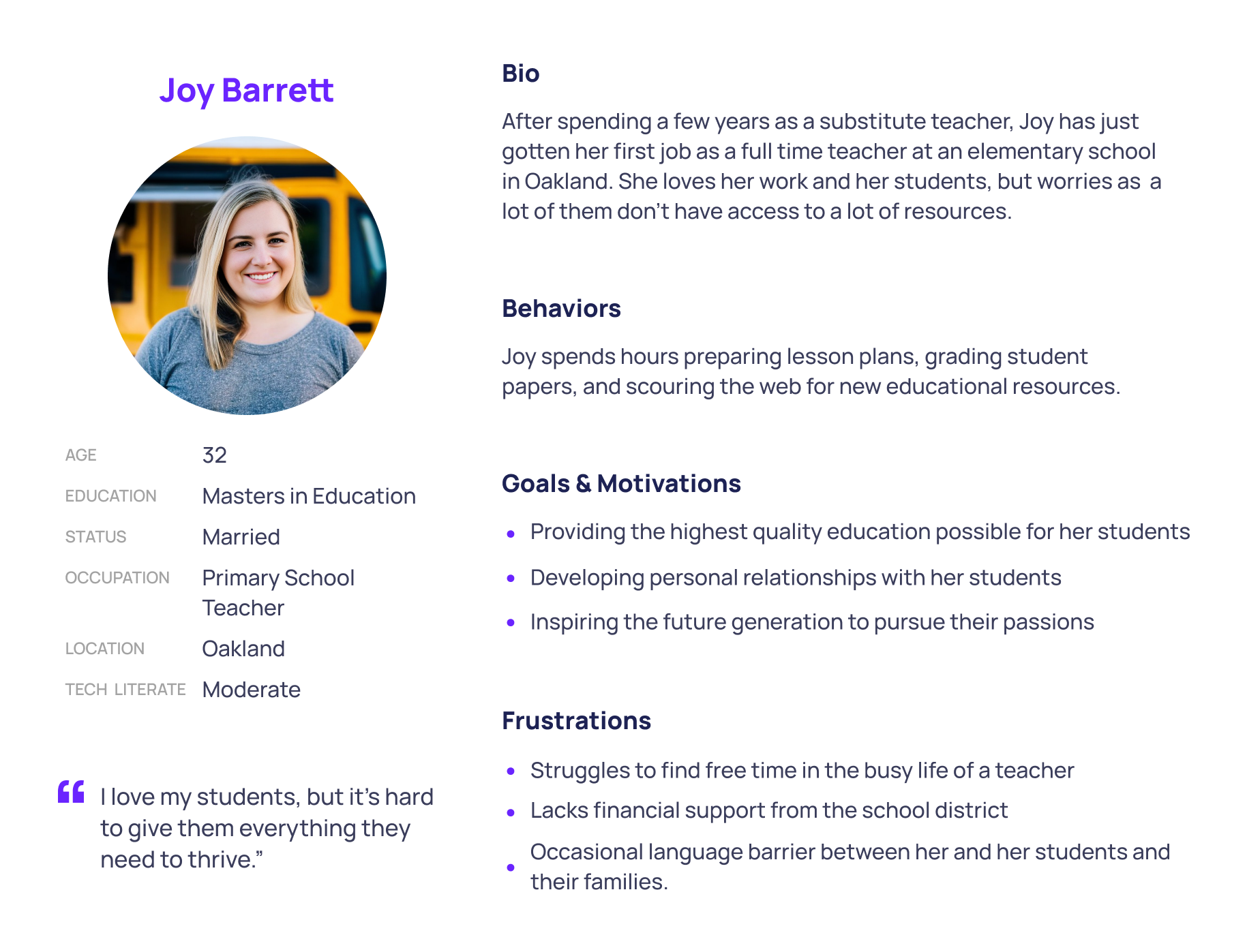
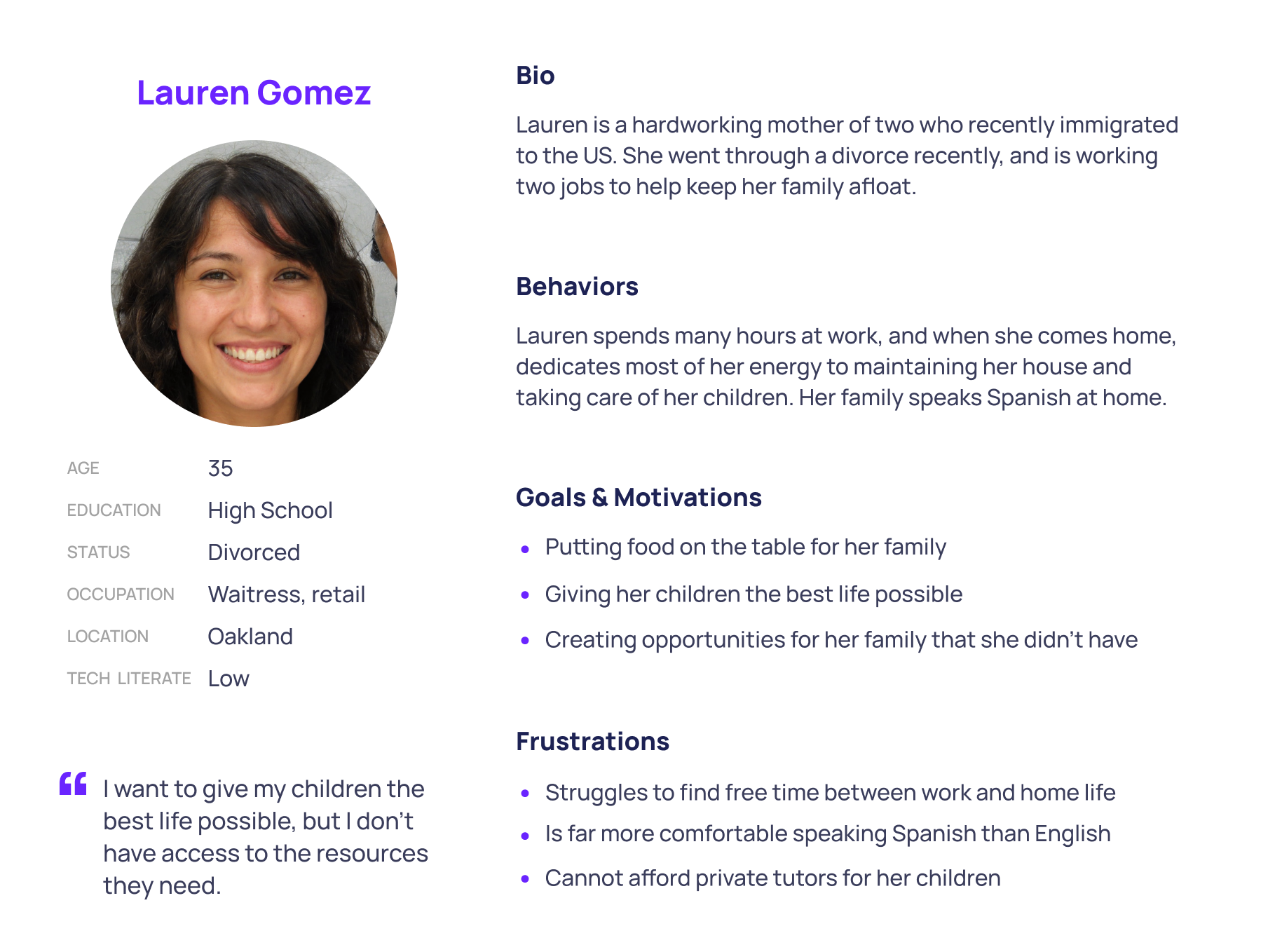
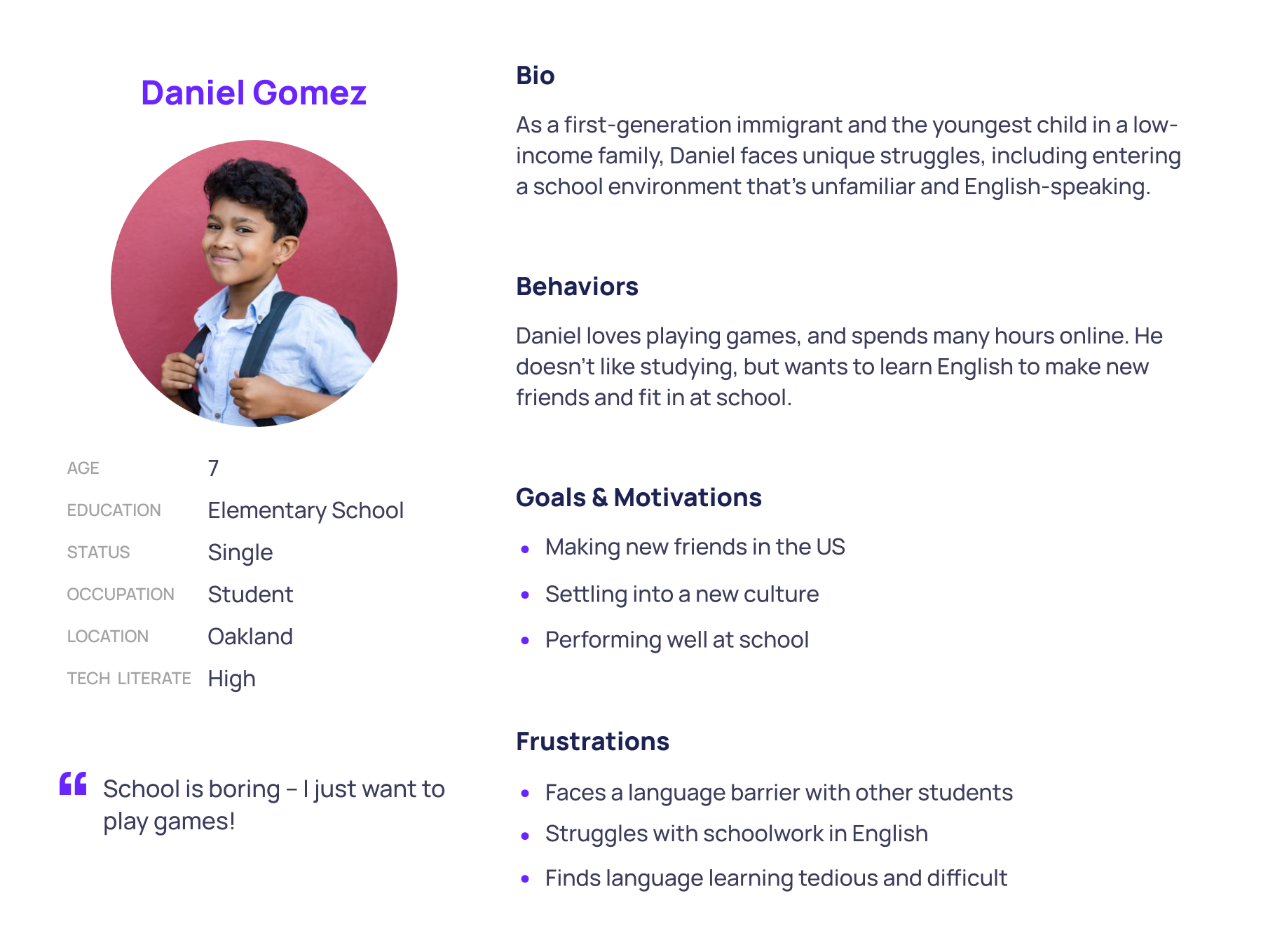
This helped me realize a core issue: even with their best intentions, parents of this demographic might not have the time or resources to help their child be prepared for school, even if they wanted to. Using this research as a baseline, I came up with the following problem statement:
How might we create a language-learning app for children that doesn’t require significant parental investment?
Building Blocks
To begin breaching this problem, I conducted a competitive analysis of five different language-learning websites—some targeted at kids, and others with a more general audience. I took note of their features, appearances, commonalities, and differences. I found that:
Websites targeted at kids often involved interactive media such as games and videos, but mostly used pre-scripted dialogue that doesn’t actually engage children
Other, high-popularity apps like Duolingo often rely on text rather than visuals, making it less accessible for kids
Apps that allow for language exchange, such as Hellotalk, are not targeted for kids (due to safety reasons), making it difficult for children to learn language via talking with native speakers
I also used my background in cognitive science, psychology, and linguistics to inspire further secondary research:
Children have a “critical period” of language learning before puberty, where language learning is hyper-efficient and natural
Children learn language best through interactive play
Storytelling is one of the most engaging methods of learning
And, with the emergence of large-language models like ChatGPT and their ability to replicate natural conversation, I thought that might serve as a natural bouncing-off point for the project. Thus, I arrived at my initial solution:
An app that uses naturalistic conversation and roleplay scenarios to teach children English, using the power of large language models to create a truly immersive experience.
This would use children’s natural linguistic strengths to enhance their learning experience, while creating a safe language learning environment and taking the burden off their parents.
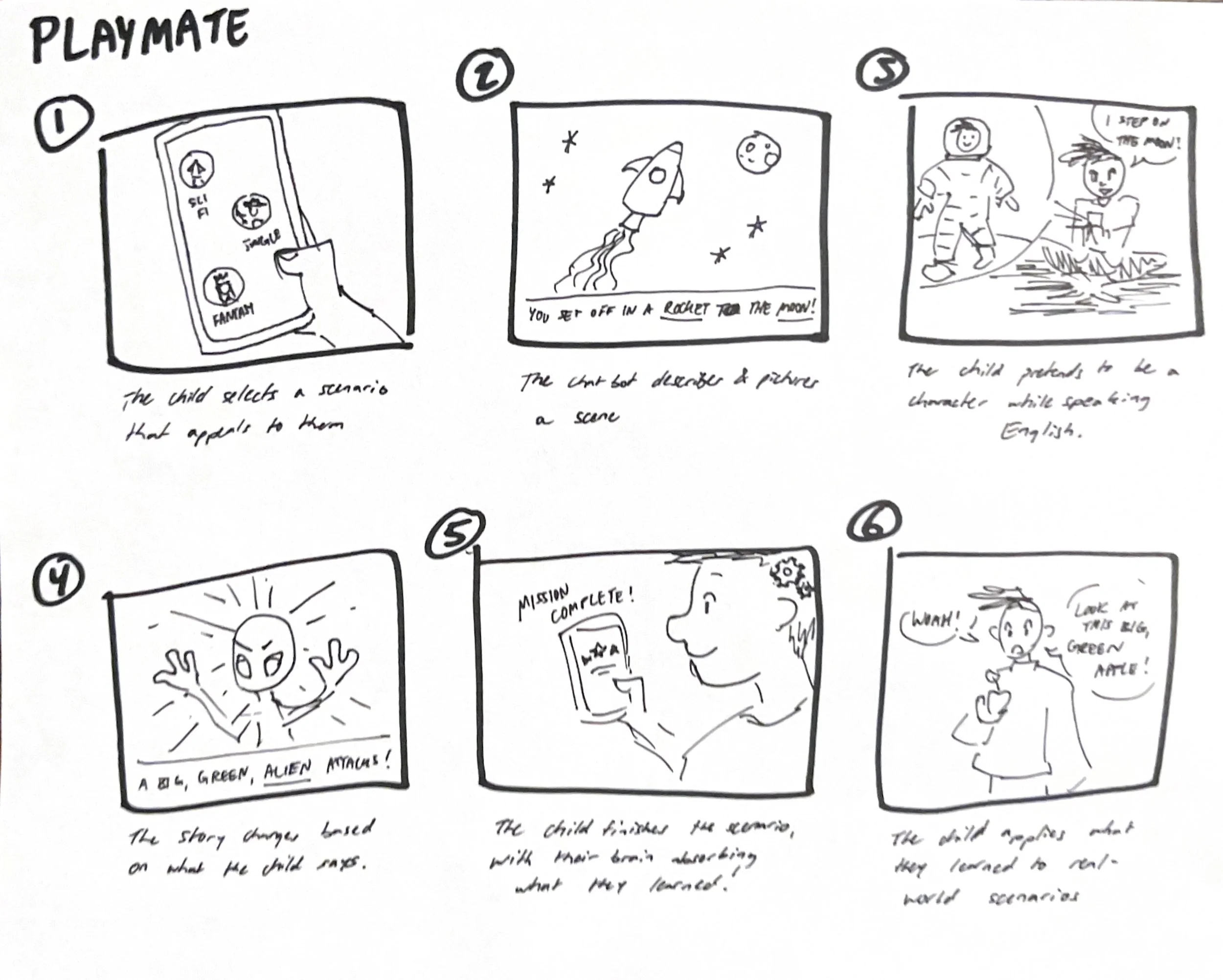
To refine the idea further, I also completed a storyboard, to pinpoint how the app would be used and communicate it to my classmates, who would provide feedback on my work at various points throughout the process.
Building the Tower
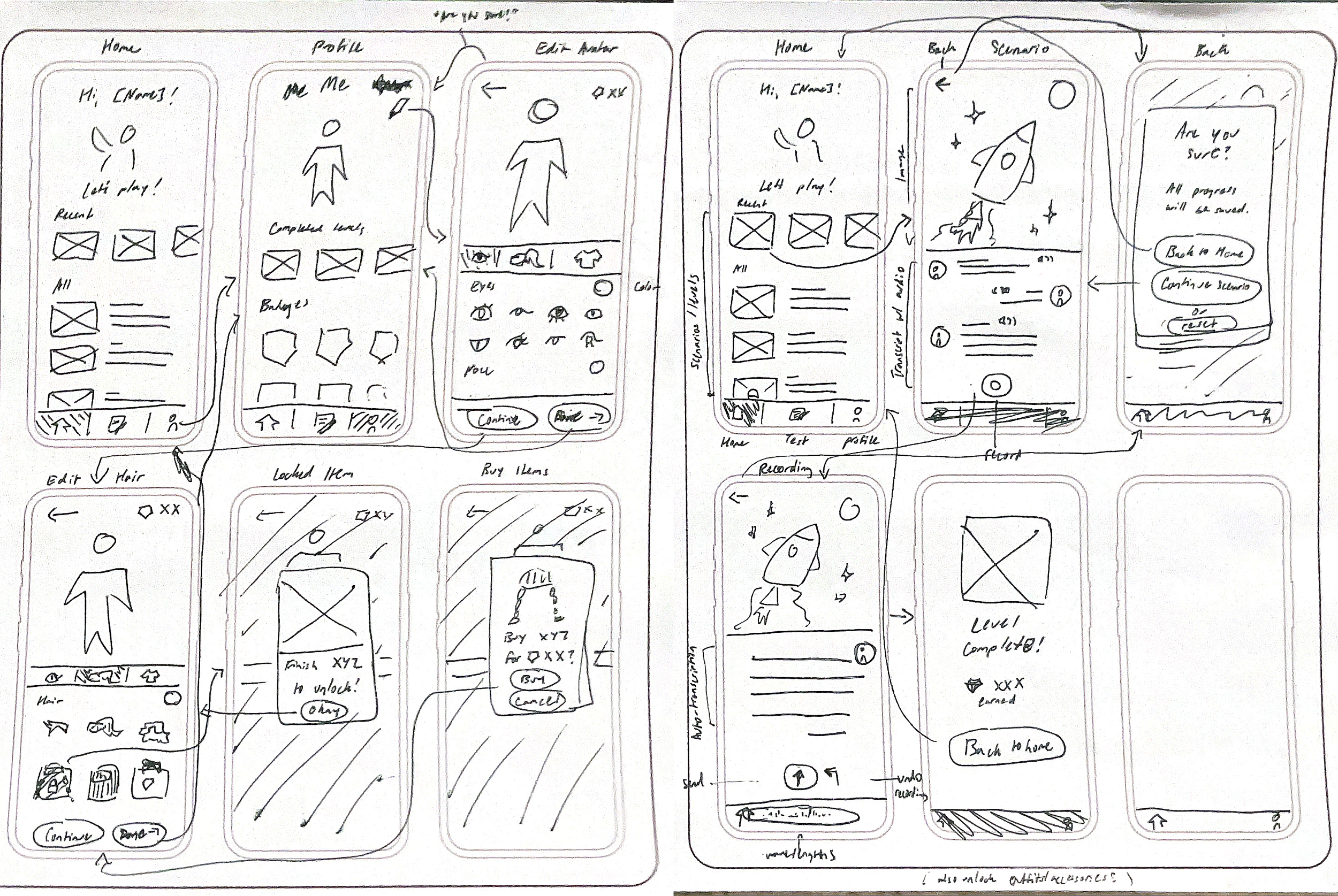
Feeling confident in this idea, I set to work with low-fidelity wireframes.
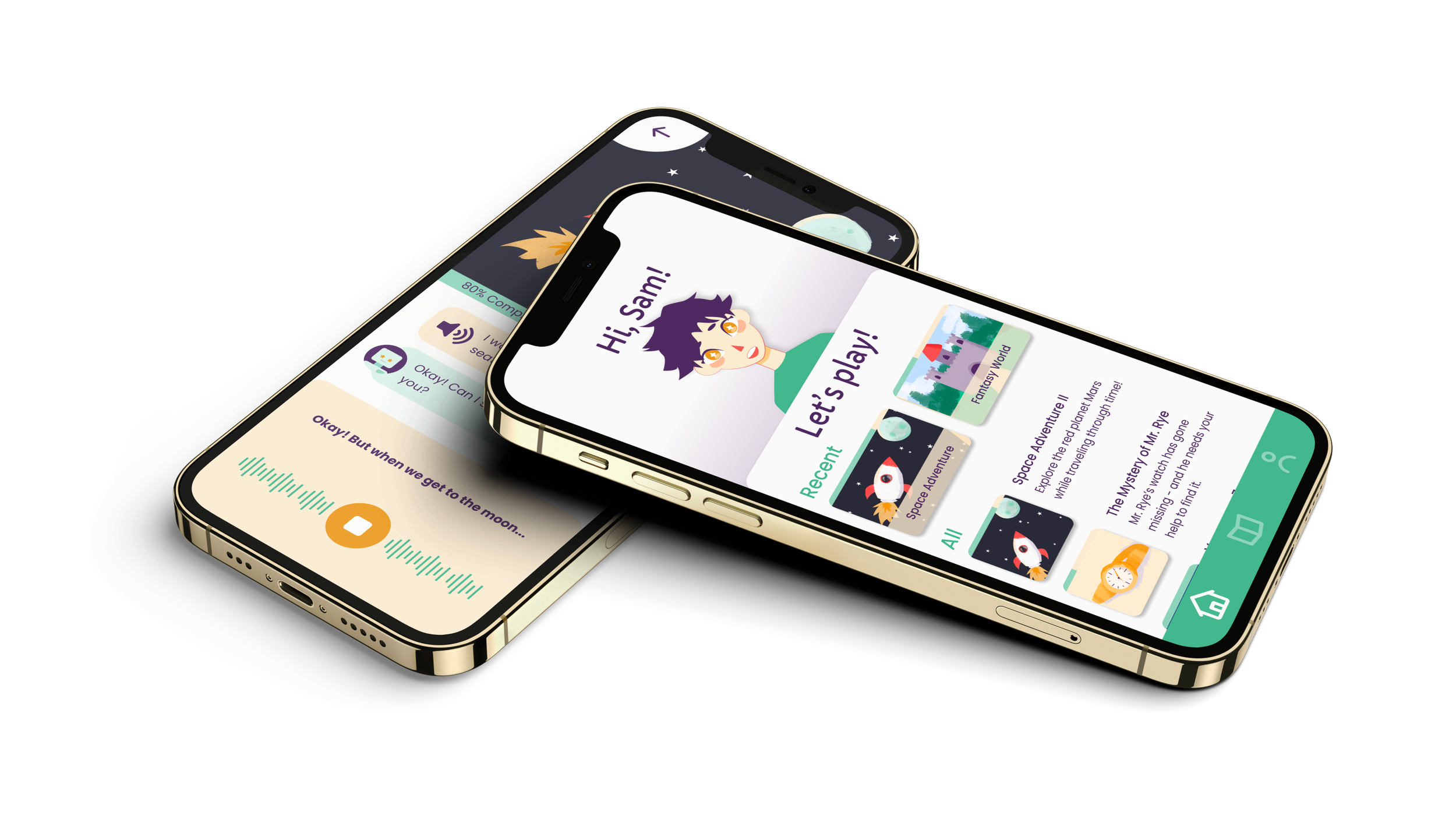
Given that my target audience was children who may or may not know how to read, I heavily incorporated images and audio, with text only there for further clarification and immersion. This included audio transcription and playback features.
To incentivize learning and encourage character identification, I also made completing a story give rewards, which allowed players to customize their character as they wished.
Making It Pretty
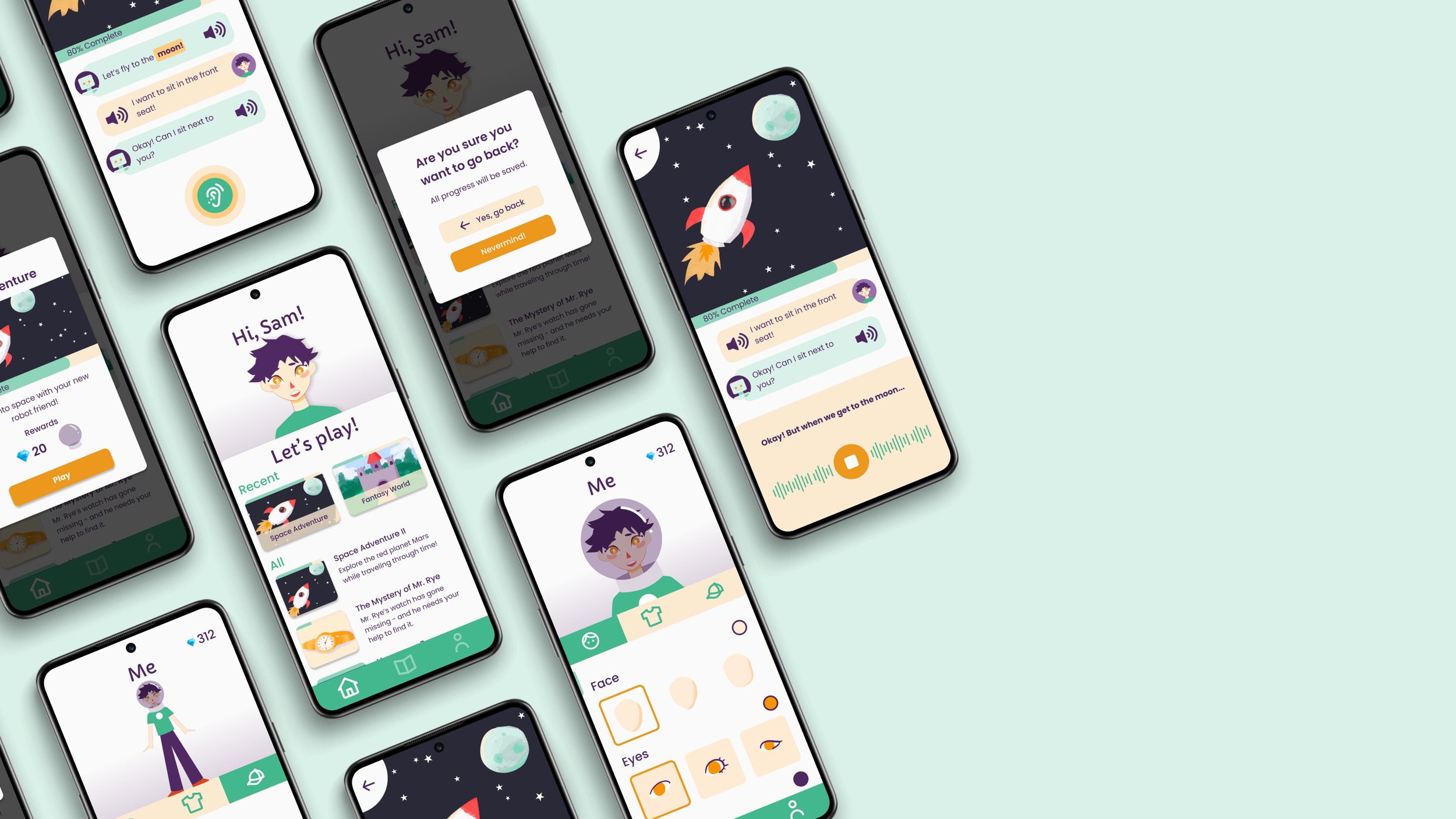
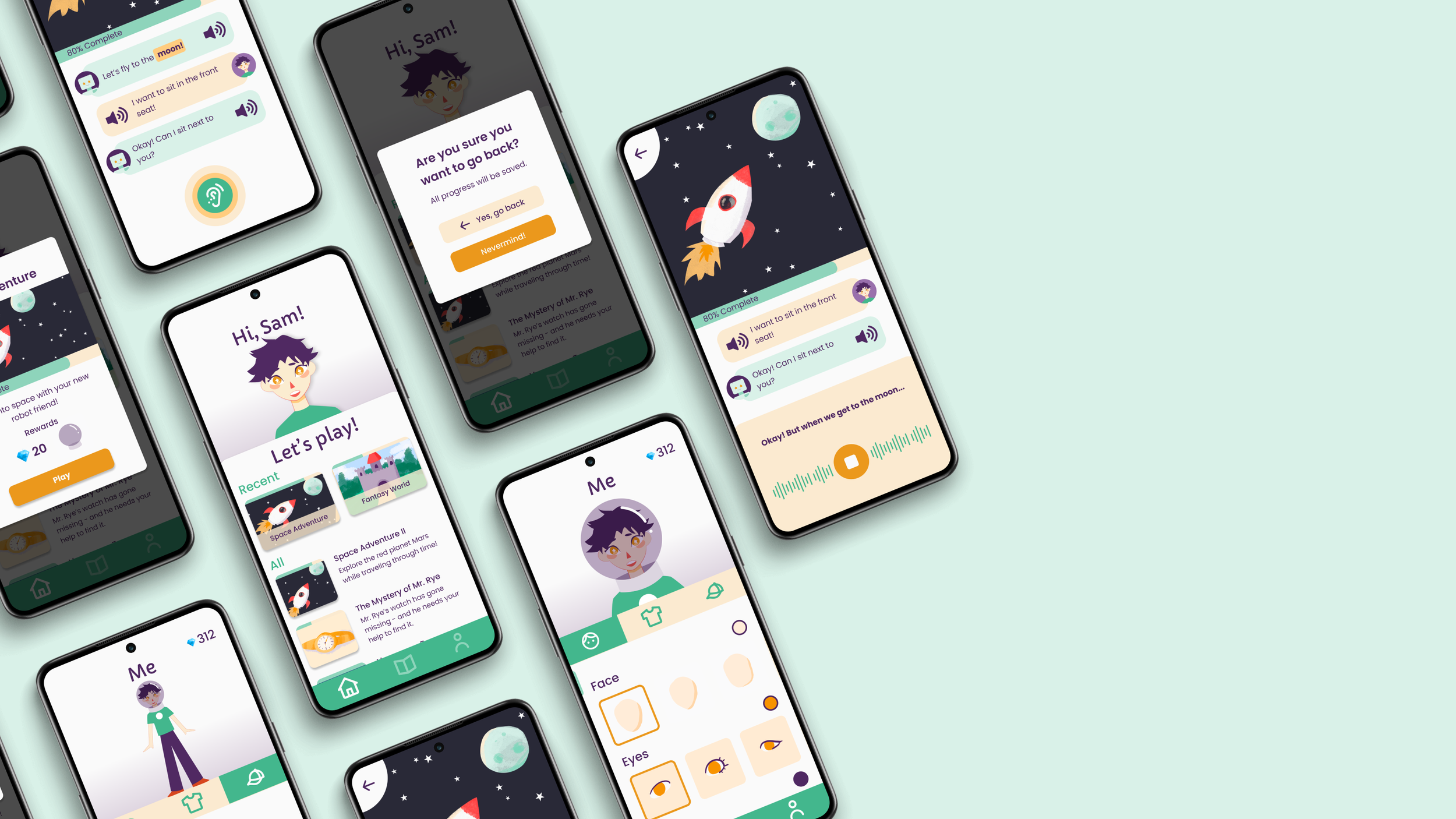
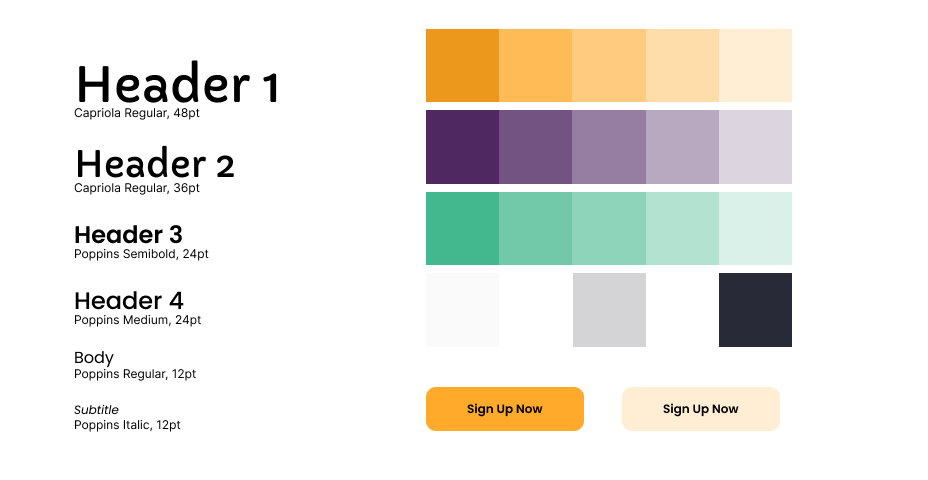
As the app takes a fun and conversational approach, I opted for the name Playmate, and wanted the design system to reflect that same playfulness. I opted for bright orange and green, the slightly-swirly Capriola typeface for headers, and rounded Poppins for the body to create a welcoming visual interface. I planned to pair this with child-friendly illustrations to round out the “storybook” theme.
Sharing is Caring
From there, I created mid-fidelity prototypes, and conducted a series of usability tests to test the flow and navigation of the app. These user tests were conducted with my classmates (18-22, college students, female) due to time constraints. In ideal conditions, I would have conducted them with children in my target audience. However, as conditions were not ideal (as they never are), I thought about how I could simulate the feeling of being unable to read. To accomplish this, I had my testers interact with the app in French, to see if they understood the general architecture, story, and interactions.
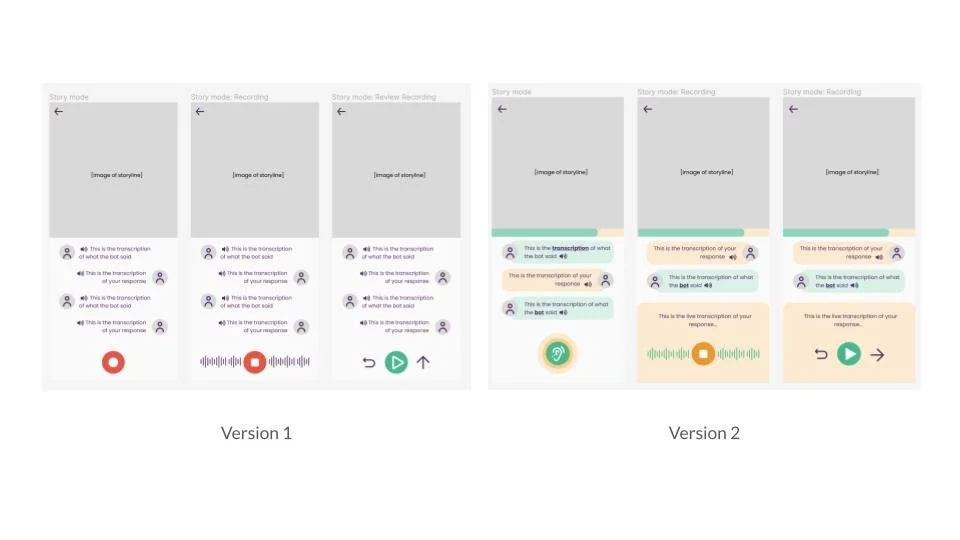
This language-switch approach proved mostly successful, helping assure me of the site’s navigability while pointing out a few problem areas. After seeing the user testing results, I made the following adjustments:
Audio buttons reordered
Record button switched into auto-listen for ease of conversation
Audio playback button made larger
Colors adjusted for readability
Back button placement adjusted
The Finishing Touches
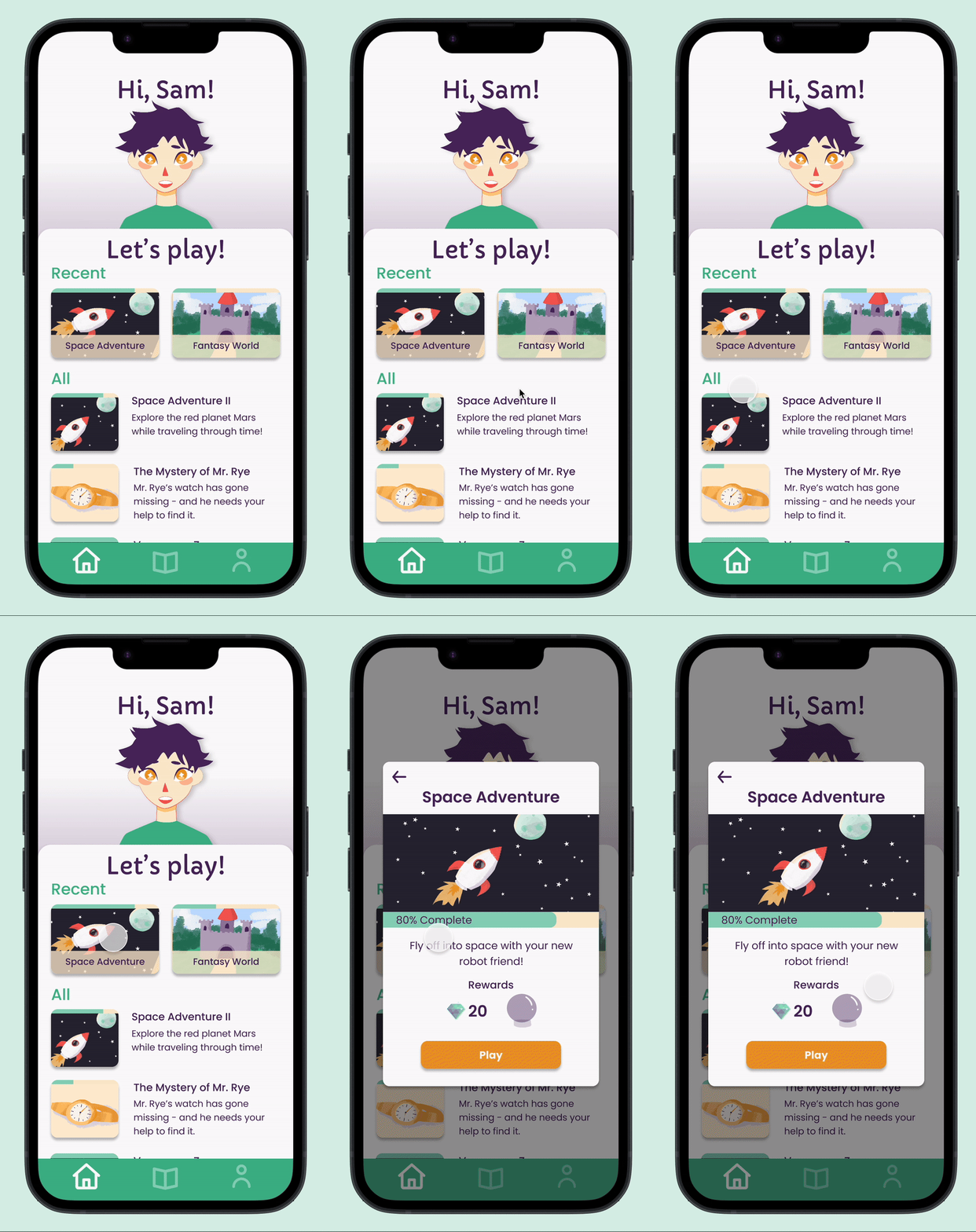
After gathering as much user feedback as possible, I incorporated the adjustments into my final prototype, now feeling confident in the general navigation. Furthermore, I added custom illustrations, full color, and more interaction.
While I’m happy with the final outcome, I do wish I had more time and access to the target demographic to further test out my assumptions. Ultimately, though, I appreciate being able to incorporate my cognitive science background into this project, and I enjoyed the opportunity to get creative with limited research resources.